
How to Choose Safe Toy Car Advent Calendars: A US Safety Certification Guide
Shoppers choose a safer toy countdown by treating the safety sentence as the certification clue, then checking whether the play format fits the household. The JOYIN listing states that the toys are safety tested and approved and that they meet United States toy standards for safe play. This guide keeps that claim separate from details the page never confirms, including a lab name and a numeric age.
What the safety sentence actually covers
The product text describes each vehicle as made from durable, high-quality materials and built to last. It then says all toys are safety tested and approved, ensuring they meet United States toy standards for safe play. Those lines are the full safety record in the description. They support keeping the set on a short list. They do not name a laboratory, a test date, or a certificate number, so a buyer cannot treat the paragraph as a scanned report.
Advent calendars that hide a toy behind a door raise a second question beside the standards claim. A child meets a new piece every morning, which means the household handles 24 separate vehicles rather than one boxed car. The listing calls them uniquely designed pull-back vehicles. Pull-back play is a simple motion: the child draws the vehicle backward and releases it so it rolls forward. The same description ties that play to coordination of hands and eyes. That is a play note from the seller, not a clinical measurement, and it should stay in that lane.
Safety wording does not replace supervision. The page presents the set for toddlers and for kids who like vehicles, yet it never prints a numeric age. Small rolling toys can still reach mouths, stairs, and pets. A certification guide has to say that plainly. Standards language is a buying signal, and an adult still decides where the vehicles are used and who is in the room.
How to read a certification claim without a lab sheet

Photo by Polesie Toys on Pexels
Certification, in ordinary shopping, means someone is claiming the toy was checked against a safety standard. On this listing the claim is the pair of phrases safety tested and approved and United States toy standards. A careful reader marks that pair as present, then writes down what is absent. Absent items include a named standard code, an age icon, a small-parts note, and any warning about outdoor surfaces. Inventing those details would make the guide less honest, not more useful.
The listed price of $29.95 is a cost fact, not a safety fact. A lower or higher price would not prove a test happened, and this price does not either. Price belongs in the budget column. Safety belongs in the standards column. Mixing them is how a colorful package crowds out the one sentence that matters.
Other facts on the page can still help a household choose. There are 24 uniquely designed pull-back vehicles. Doors open one a day starting December 1. The vehicles are described as colorful, easy to carry, and usable outdoors. Children who like to collect, race, and explore are the audience the description names. The listing also calls the set an alternative to a traditional children's tools advent calendar, without describing that other format. None of those points replace the safety sentence. They answer a different question: what the child does after the door opens.
Match the 24-door rhythm to real mornings
A standards claim only helps if the countdown itself fits the month. One door each day from December 1 covers 24 mornings and lands on December 24. Christmas Day is the morning after the last door, which is calendar math from the stated start and the stated count, not a promise printed as a holiday slogan. Families who want a gift on December 25 still need a separate plan. The calendar's job is the run of daily reveals before that morning.
Because the vehicles are pull-back toys, the few minutes after each door matter as much as the reveal. A clear patch of floor, a porch, or another outdoor spot the listing says is acceptable gives the new vehicle a short run. Designs differ, so one car may roll differently from the next. The description does not publish speeds or weights. A tray keeps earlier vehicles from being lost under wrapping paper. Durable materials, as the listing puts it, are meant to last through repeated play, not as a warranty and not as a claim that a toy is indestructible.
Certification clues on this listing
| Check | What the page shows | What it does not show | | --- | --- | --- | | Safety line | Tested and approved | No lab name or date | | Standards | United States toy standards | No code number | | Vehicles | 24 unique pull-back designs | No weights or sizes | | Schedule | One door a day from December 1 | No age grade | | Price | Listed at $29.95 | No link to safety |
Checks before treating a set as certified
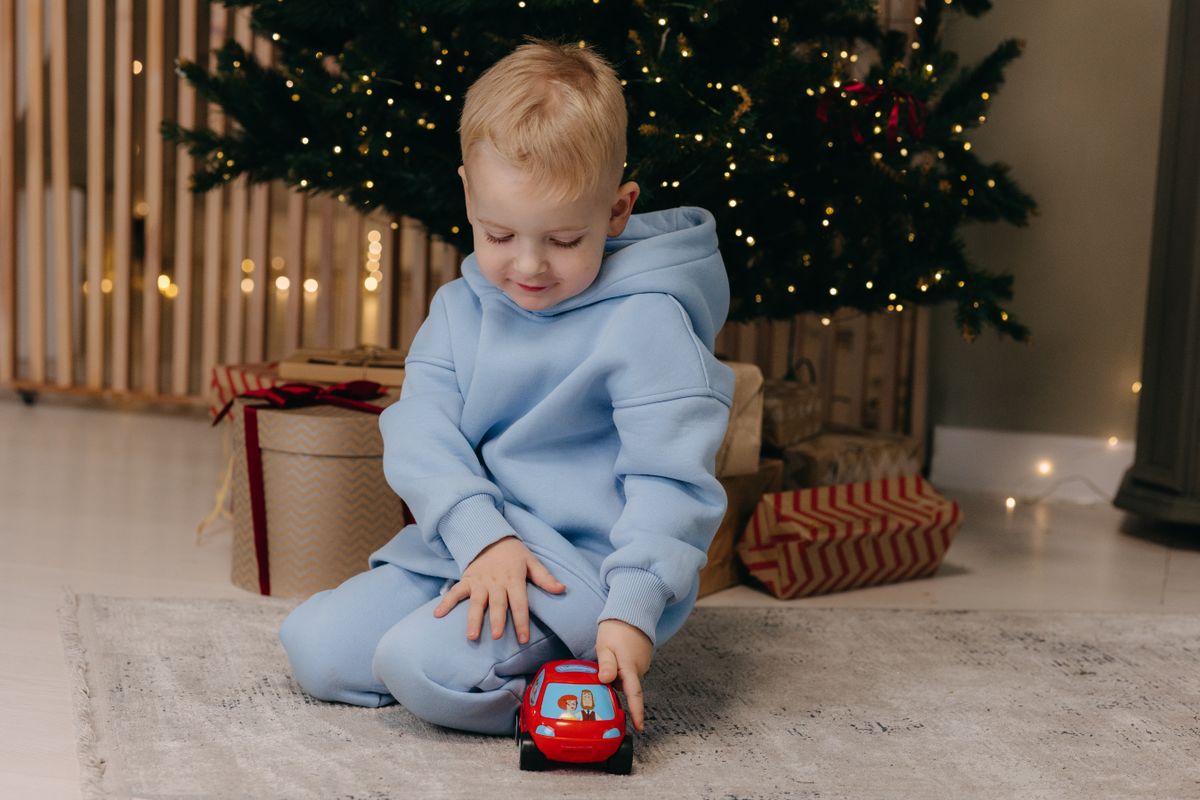
Photo by Polesie Toys on Pexels
- Read the safety tested and approved line before comparing colors or themes.
- Confirm the toys are described as meeting United States toy standards.
- Note that a laboratory name and a certificate number are not printed.
- Count on 24 uniquely designed pull-back vehicles, one behind each door.
- Plan the first opening for December 1 and one new door each day after that.
- Treat the missing numeric age as unsettled until the package label is in hand.
- Keep the $29.95 price in the budget column, separate from the safety column.
Certification questions the listing can answer
Does the description name a certificate number?
No. The listing says the toys are safety tested and approved and that they meet United States toy standards. It does not print a certificate number, a laboratory name, or a test date.
How many vehicles are included?
The listing includes 24 uniquely designed pull-back vehicles. One door opens each day, so the reveals run from December 1 across 24 days.
Is a numeric age printed in the description?
No numeric age appears in the listing text, even though toddlers and vehicle-loving kids are mentioned. The package label is the place to read any age icon this page does not confirm.
Does the listed price prove the toys were tested?
No. The listed price is $29.95, and that figure is only a cost. Testing is supported by the safety sentence, not by the price.
Related reading
Shoppers still comparing formats can read three related guides next.
- Which countdown is safer for a toddler
- How to select a construction vehicle countdown
- A three-axis model for wooden car countdowns
What to do next
A household that wants this countdown can reread the safety sentence, write December 1 on the family calendar, and pick a tray for vehicles as they leave the doors. The package label, not this guide, should settle any age mark the listing text leaves out. If that label conflicts with the way the child plays, the set should wait.
Cover photo by Polesie Toys on Pexels.