
Holiday Toy Safety FAQs: Are Toy Car Advent Calendars Safe for Toddlers and Kids?
These holiday FAQs treat the countdown as a reasonable option for toddlers and kids when the listing's safety claim is true on the package and an adult still supervises play. The JOYIN description says the vehicles are safety tested and approved and that they meet United States toy standards for safe play. It does not state a numeric age, so toddler use stays a supervision decision rather than a promised grade.
Holiday safety questions the product text can settle
The first holiday question is what kind of object sits behind the door on toy advent calendars. This description answers with vehicles, not food. There are 24 uniquely designed pull-back vehicles, revealed one each day starting December 1. A pull-back vehicle is wound by drawing it backward, then released to roll. That is active, screen-free play, and the listing presents it as something children can repeat after the door moment is over.
The safety answer, as far as the page goes, is a single claim. All toys are safety tested and approved, and they are said to meet United States toy standards for safe play. Each vehicle is also described as made from durable, high-quality materials and built to last. Those sentences matter for holiday shopping because many countdowns are chosen quickly. A parent can still pause on the exact wording instead of assuming every colorful box has been checked.
What the page cannot settle is just as important for toddlers. No age number, no weight, and no size appear in the description. No choking result is printed. Families with toddlers should read the package label before the first door and should not fill that gap with a guess. Kids who are older still benefit from a clear floor and a put-away spot, because 24 small vehicles accumulate fast across a holiday month.
Toddlers, small vehicles, and who stays nearby
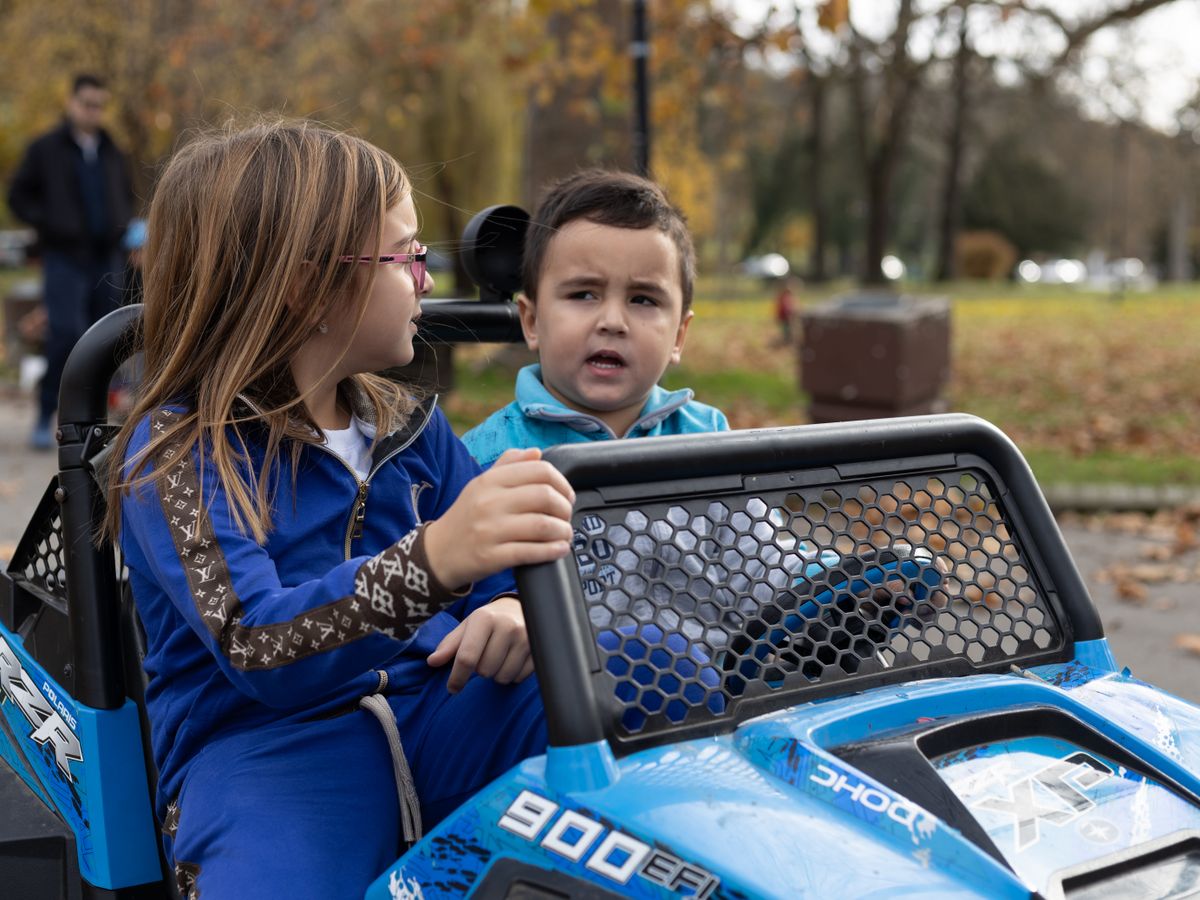
Photo by Boris Hamer on Pexels
Toddlers and older kids do not use the same toy in the same way. A toddler is more likely to mouth a new object, carry it between rooms, or follow it toward stairs. The listing does aim the set at a toddler countdown and at kids who love vehicles, so the seller is not hiding that younger children are part of the audience. Aiming a product at toddlers is not the same as printing an age grade. The missing number is the reason an adult stays in the room for early openings.
The daily rhythm can help. One new vehicle a day is a smaller introduction than dumping a full fleet on the rug at once. The child has time to notice color and shape, to practice the backward pull, and to put the vehicle with the ones already opened. The description says this kind of play can cultivate coordination of hands and eyes. That is fair to repeat as the seller's play note. It is not fair to stretch into a promise of faster development or a therapy outcome.
Outdoor carry and the rest of the safety picture
The description says the vehicles are easy to carry and can be used outdoors. That is useful in a holiday week when the floor inside is already full. Outdoor play still needs a flat enough path and a lookout for puddles, grates, and traffic. The listing does not describe waterproofing, brake features, or a top speed. Colorful, active play is the tone of the copy. It is not a performance spec, and it should not be read as one.
Materials stay at the level the seller chose: durable, high-quality, and built to last. No resin name, no metal gauge, and no wood species is given. A buyer who needs a specific material for an allergy or a household rule will not find that answer here and should use the package or a direct product question instead of a guess. Durability language supports the idea that December play can continue into later months. It does not insure the toy against loss, water, or a hard drop the page never discusses.
The listed price is $29.95 for the set. That figure does not buy a written age grade the description forgot to include. For toddlers, the practical close is the same: believe the standards sentence, verify it on the package, and supervise the pull-back play.
Safety answers at a glance
| Question | Listing answer | Still open | | --- | --- | --- | | Tested? | Safety tested and approved | No lab report on the page | | Which rules? | United States toy standards | No standard code named | | For toddlers? | Toddler use is mentioned | No numeric age | | What is inside? | 24 pull-back vehicles | No sizes or weights | | Where to play? | Indoors or outdoors | No surface rules printed |
Holiday safety checks for households with toddlers

Photo by Ric Rodrigues on Pexels
- Read the safety tested and approved line out loud before the first door.
- Look for United States toy standards language and compare it with the package.
- Do not invent an age for toddlers when the description prints none.
- Open one door a day starting December 1 instead of emptying the box.
- Stay nearby while a toddler practices the backward pull and the release.
- Use the easy-to-carry note for outdoor play only on a surface an adult has checked.
- Store each day's vehicle before the next holiday activity begins.
Questions parents ask before the first door
Are the vehicles described as safety tested?
Yes. The listing says all toys are safety tested and approved and that they meet United States toy standards for safe play. The page does not include a separate lab report.
Does the listing give an age for toddlers?
It mentions toddlers and kids who love vehicles, but it does not print a number. An adult should use the age mark on the package and should supervise early play.
Can the vehicles go outside?
The description says they are easy to carry and can be used outdoors. It does not describe a required surface, so an adult still picks a clear path.
Is the coordination note a medical claim?
No. The listing says play can cultivate coordination of hands and eyes. That is a description of play, not a clinical result or a guaranteed skill gain.
Related reading
More holiday planning notes sit in these three published guides.
- Which countdown is safer for a toddler
- Selecting a race car countdown for boys
- Ways to customize a countdown for children
What to do next
Before December 1, a household can set the box where a toddler cannot open every door at once, then read whatever age mark is printed on the package. The first morning only needs one vehicle, a clear roll path, and an adult close enough to pocket the toy when play ends. Later doors can follow that same short pattern.
Cover photo by Polesie Toys on Pexels.