Choosing the Right Vehicle Advent Calendar for Toddlers vs. Preschoolers: An Age-by-Age Guide
Choosing the right vehicle advent calendar for toddlers versus preschoolers starts with a limit: this listing names toddlers and does not print an age, a preschooler definition, or an age-by-age chart. A guide can still sort the decision by what the child does with a small rolling toy. The set itself is 24 uniquely designed pull-back vehicles, one door each day from December 1.
Choosing when no age number is printed
The right match is not a number this page forgot. The JOYIN description speaks to a toddler countdown, to kids who want an advent calendar, and to children who love to collect, race, and explore. It never says how old those children are. Preschoolers are not named. An age-by-age guide that invented brackets, such as a start age and an end age, would be pretending the listing had measured something it does not mention. This guide will not do that.
What the page does make clear is the object and the pace. Twenty-four uniquely designed pull-back vehicles. One door each day starting December 1. A pull-back vehicle is drawn backward and released. The seller says that play can cultivate coordination of hands and eyes. Materials are durable, high-quality, and built to last. The toys are safety tested and approved to United States toy standards. Those sentences help a household picture the month. They still do not grade the child.
Toddlers and a slower first week
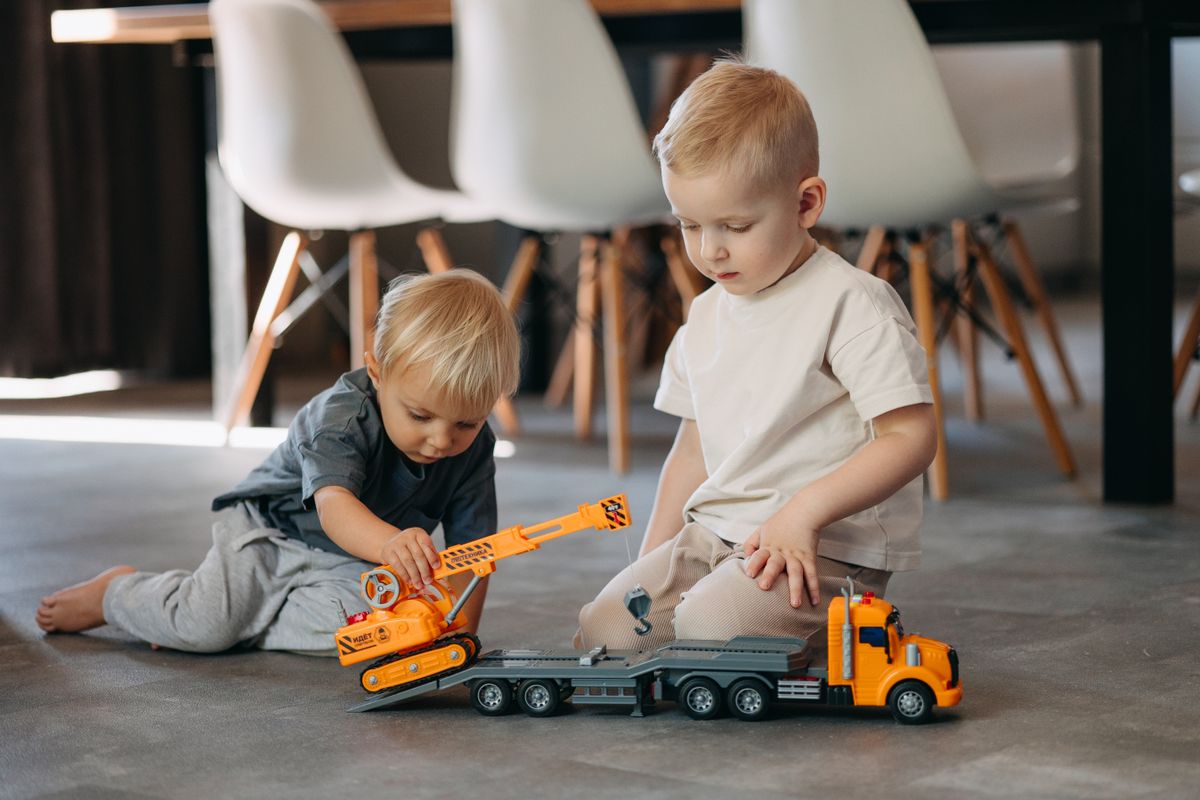
Photo by Polesie Toys on Pexels
Toddlers, as this listing uses the word, are part of the audience and not a defined stage. The practical signs that call for a slower week are visible without a chart. A child who mouths toys, follows a roll toward stairs, or cannot yet let go on purpose needs an adult within reach for every door. One new vehicle a day is already a smaller introduction than dumping a fleet on the rug. That pace is the seller's instruction, and it matters more when the child is still exploring with the mouth.
Play can stay very short. The door opens, the adult looks the vehicle over, and the child gets a supervised roll on a clear floor. The listing says the vehicles are easy to carry and can be used outdoors, but a toddler outing still needs the same adult and a path without traffic. No size or weight is printed, so an adult uses ordinary judgment about small parts and pockets the vehicle when attention wanders. The coordination note should stay a description of play. It is not a promise that a toddler will gain a skill on a schedule.
Preschoolers who want a fleet and a race
Preschoolers appear in the title of this guide and not in the product text. Households often use that word for children who can follow a one-step request, wait for a turn, and care about a collection. If that describes the child, the same 24 vehicles can support a longer roll: a start line, a finish, and a tray sorted by color. If it does not describe the child, the toddler pattern above is the safer read, whatever birthday is on the calendar. Behavior beats a label the seller did not print.
A child who already races toy vehicles will want the new design compared with yesterday's. Unique designs make that comparison interesting, and the listing does not claim equal speed. The adult can give the child the job of setting the books that mark the lane. That job uses the wait built into the countdown. December 1 starts the sequence, and Christmas is not a reason to open the remaining doors early. Anticipation is part of what the product text is selling.
Observed play, not a printed age
| What an adult sees | Closer plan | Listing support | | --- | --- | --- | | Mouths new objects | Adult at the door, short roll | No age number printed | | Carries toys off | One vehicle, then a lidded bin | Easy to carry | | Lines vehicles up | Color sort after the roll | Unique designs | | Asks for a race | Start line and three rolls | Pull-back play | | Mixed ages at home | Older child helps, adult stays | Pace is one door a day |
Age-guide checks that stay inside the listing
Photo by Polesie Toys on Pexels
- Do not invent a numeric age for toddlers or preschoolers.
- Read any age mark on the package before the first door.
- Use mouthing and stair-following as reasons to stay close.
- Use turn-taking and collecting as reasons a short race can work.
- Open one door a day starting December 1 either way.
- Keep opened vehicles in a bin the younger child cannot empty.
- Treat hand and eye wording as play, not as a measured result.
Questions about toddlers and preschoolers
Does the listing give an age for toddlers?
No. It mentions toddlers and does not print a number. The package is the place to read any age mark this guide cannot confirm.
Does the page define preschoolers?
No. Preschoolers are not named in the product text. A household should watch how the child plays, then follow the carton if it states an age.
Is the same set described for both groups?
The listing describes one set of 24 pull-back vehicles and a broad audience. It does not split that set into age-by-age kits.
What pace helps either group?
One door each day starting December 1. That limit keeps a new vehicle from arriving in a pile, which matters most when supervision is close.
Related reading
Age and safety questions are taken up in these three guides.
- Which countdown is a safer fit for a toddler
- Screen-free non-candy countdowns for kids
- Holiday safety questions for toddlers and kids
What to do next
Before wrapping, an adult can watch how the child treats small toys already in the house and can leave the carton age mark as the final word. If the child mouths objects, the first week stays short and supervised. If the child already lines vehicles up, a start line can wait until December 1, still at one door a day.
Cover photo by Kindel Media on Pexels.