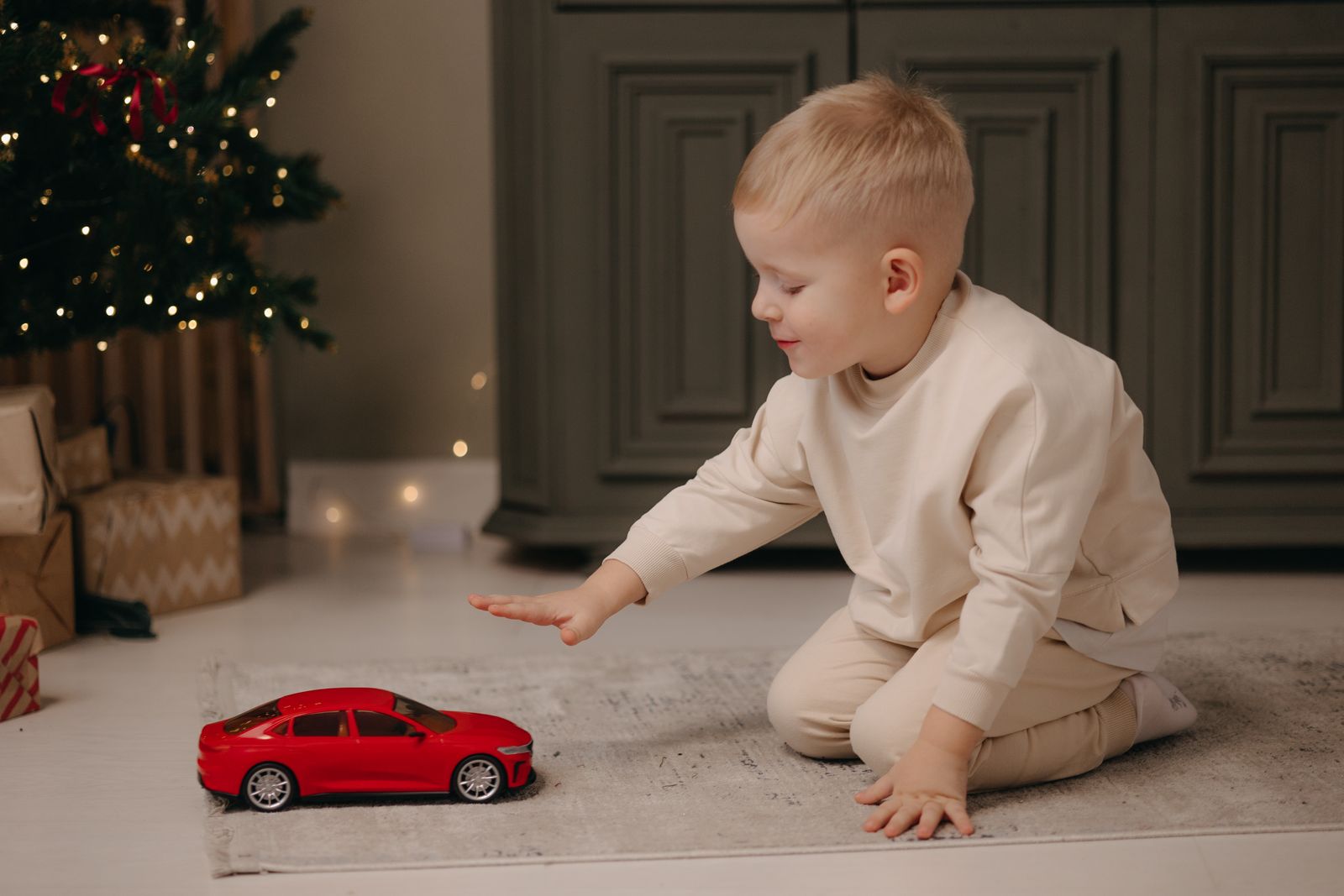
How to Build a Fun Daily Christmas Countdown Routine with Pull-Back Car Games
A household can build a daily Christmas countdown routine from one door and a short pull-back game, and the listing does not print that routine. The confirmed schedule is a start on December 1 and one new vehicle each morning. Games after the reveal are optional household play, not a booklet in the box.
Build the morning around one closed door
A routine is useful when it is short enough to repeat. The product supplies the spine. December begins the count. One door opens. A pull-back vehicle comes out. The other doors stay closed. That sequence can be the whole Christmas morning ritual. Building extra steps around it is allowed as household choice. It is not required by the listing, and it should not be described as an official program. Fun, in the copy, is colorful play and anticipation. It is not a minute-by-minute plan.
The same spine protects the countdown. If several doors open at once, the daily shape disappears and the set becomes a bin of vehicles. The listing sells the wait as part of the pleasure. A routine that honors one door keeps that pleasure. There are 24 uniquely designed vehicles, so the object in the hand changes even when the steps do not. Unique does not mean a new rule each day. The listed price of $29.95 covers the vehicles. It does not cover a clock, a chart, or a printed script.
Pieces of a Christmas countdown routine
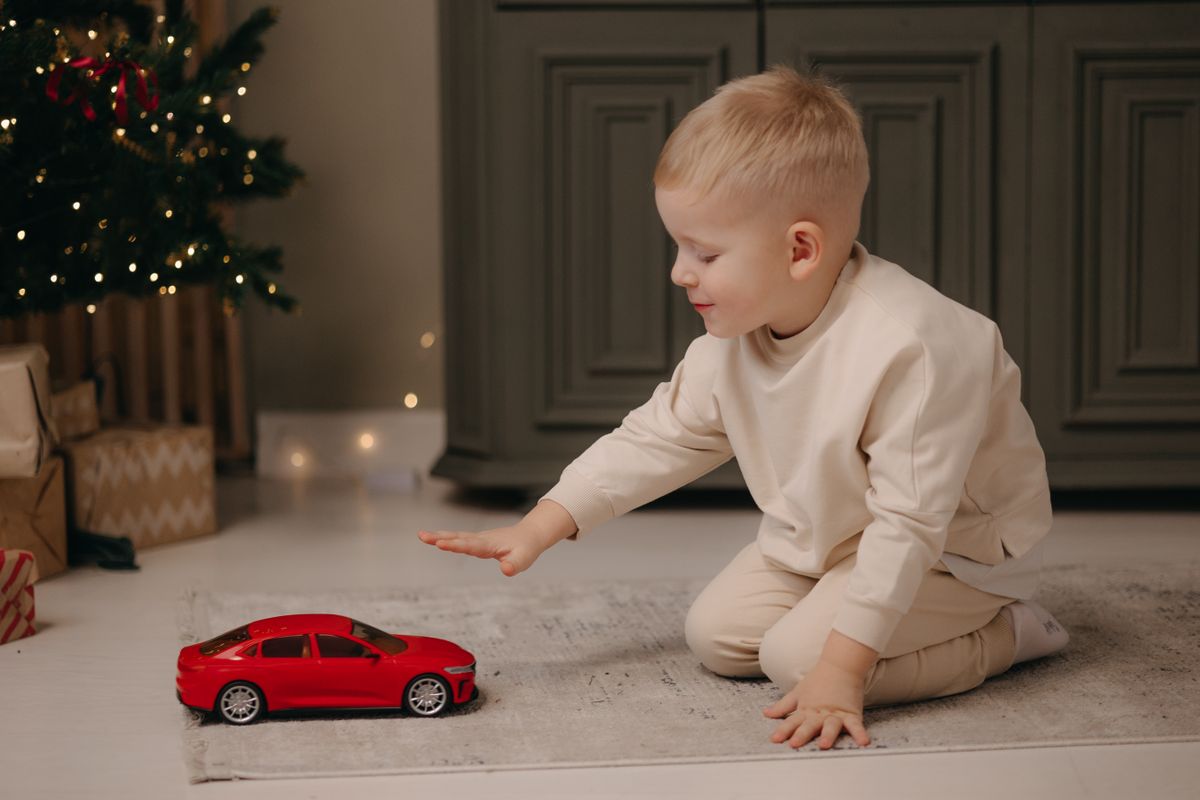
Photo by Polesie Toys on Pexels
Four pieces are enough. First, open the day's door and name the vehicle in ordinary words. Second, set it with the vehicles from earlier days so the fleet is visible. Third, offer a few pull-back releases on a clear floor: grip, draw backward, let go, and watch. The listing says that motion can cultivate coordination of hands and eyes. Fourth, put the fleet on a shelf an adult chooses and stop. The page does not describe a case, so the shelf is household storage. Stopping is part of the routine. Hours of fun is a tone, not an order to keep going until someone is tired.
Interactive is a fair word for this shape because the child handles a vehicle rather than only looking at a picture. The listing itself calls the countdown interactive and hands-on. It does not assign roles, teams, or a winner. Children who like to collect, race, and explore can add a side-by-side roll of two open vehicles. That roll is a game in the ordinary sense. It is not a matched-speed event, because high-speed is unmeasured and the designs are not described as equal. If the child only wants to push, the naming and the count can still happen. The pull-back release is an offer, not a demand.
Pull-back games after the reveal
Games should stay inside the facts. A cushion can be an aim point. A hallway can be a lane. Neither object is in the box. Jumps, stairs, and drops are not described, and durable materials built to last are not permission to create them. Outdoor play fits only the line that the vehicles are easy to carry and can be used outdoors. A dry, flat spot is the setting. Wet ground and the street are not. An adult stays nearby. Safety tested and approved to United States toy standards is the safety sentence. It does not include a routine diagram.
Toddler language appears, and a numeric age does not. A routine for a younger child may be only the reveal and a push. A routine for an older child may include the release and a short race. The page does not split those versions by year. Readiness is a household judgment. The set is also an alternative to a tools countdown, so the morning does not borrow tools. Daily Christmas play works when it ends while the next door is still closed. That closed door is what makes the routine a countdown rather than a single bin of pull-back games.
Routine steps and the line behind each
| Step | What happens | Page support | | --- | --- | --- | | Open | One door, one vehicle | Daily reveal from December 1 | | Name | Say what came out | A countdown children can follow | | Roll | Grip, draw back, release | Hands and eyes | | Race | Two open vehicles, optional | Collect, race, explore | | Stop | Shelf the fleet | No case is described |
Setting a December morning routine

Photo by Boris Hamer on Pexels
- Build the routine around one door, not around a printed script.
- Start on December 1 and leave later doors closed.
- Offer a short pull-back game, then allow a push if that is the interest.
- Keep races unmatched, because no shared speed is printed.
- Use a dry, flat spot outdoors and skip the street.
- Do not add a minute quota or a numeric age.
- Treat $29.95 as the vehicle price, not the price of a game book.
Questions about a daily countdown routine
Does the listing print a routine?
The listing prints a start date, one door a day, and pull-back vehicles. It does not print a timed script or a booklet of games.
What makes the routine a Christmas countdown?
The closed doors hold the remaining days until Christmas. Opening one vehicle each morning is the count the page describes.
Are the games required?
A roll or a short race can follow the reveal. The page does not require a particular game, a score, or a minimum play length.
Can the same steps work for a toddler?
Toddler wording is on the page, and a numeric age is not. A shorter version with a reveal and a push still respects the one-door schedule.
Related reading
Play pages cover daily race ideas, painter-tape paths, and ramps for pull-back vehicles.
- Daily play ideas for a race vehicle countdown
- Painter tape ideas for a Christmas race path
- How household ramps suit pull-back vehicles
What to do next
An adult can try the four-step morning on December 1 and keep it only if it stays short. The door rule is the piece that comes from the listing. The cushion, the shelf, and the optional race are household additions. If the routine grows longer than the child's interest, cut the games and keep the single closed-door countdown.
Cover photo by Polesie Toys on Pexels.