Toy Car Safety 101: What Parents Need to Know About Advent Calendar Safety Standards
Parents need advent calendar safety standards translated into what a listing prints and what it leaves out. This page says the toys are safety tested and approved and that they meet United States toy standards for safe play. It does not name the standard, the laboratory, or a numeric age.
What the safety sentence actually states
The JOYIN listing states that the toys are safety tested and approved and that they meet United States toy standards for safe play. Parents reading about advent calendar safety standards should stop on that sentence and notice its shape. It is a broad assurance. It is not a named code, a laboratory report, or a certificate number. A shopper who has seen other pages cite a specific rule will not find that name here, and the listing does not confirm any particular identifier. The tested-and-approved line is still useful, because a page that says nothing about testing is a different kind of page. It is not, by itself, a full standards file.
The listed price of $29.95 does not add a missing code. Price is what the set costs on this listing, not evidence that a laboratory signed a report. The same limit applies to the vehicle count. There are 24 uniquely designed pull-back vehicles, revealed by opening one door a day starting December 1. That schedule describes a countdown. It does not describe a safety test, a drop height, or a small-parts measurement. None of those numbers appear, so they should not be invented to make the standards story sound more complete.
Standards parents cannot see on this page

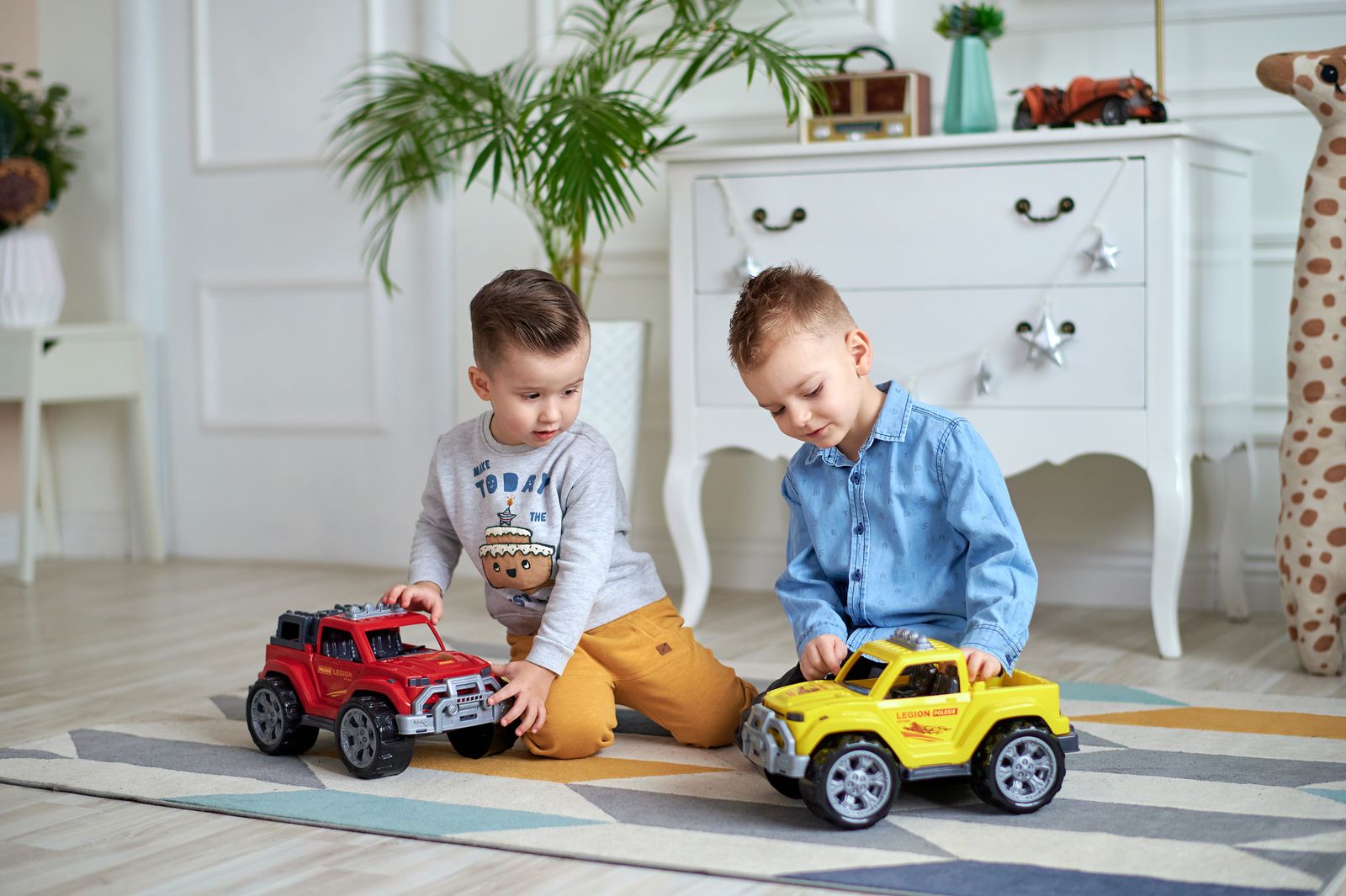
Photo by Luna Andrade Arango on Pexels
Standards talk often expects a code, an age grade, and a material note. This listing withholds the first and the second, and it keeps the third general. Each vehicle is described as durable, high-quality material built to last. The page does not name a resin, a metal, a coating, or a finish. Calling the vehicles a material the page never uses would overstep the text. Parents can record the words that are present and leave a blank beside any standard they hoped to see.
The toddler wording is another blank that looks filled in. The description speaks to a toddler countdown and to kids who love vehicles. It never prints a numeric age. An adult still has to decide whether the child in the room is ready for small rolling vehicles. The safety sentence does not replace that judgment. It also does not say the set is free of small parts, because the page never uses that phrase. A household that needs a small-parts line has to treat the silence as silence, then supervise accordingly. Durable construction and a standards sentence can sit side by side without becoming a promise about every loose piece a child might find.
Doors, outdoors, and adult supervision
Daily use has a safety shape even when the page is quiet about procedures. December 1 is the first door. One new pull-back vehicle comes out each day after that. Opening several doors at once does not create a safer set, and it spends the countdown the listing is built around. Unopened doors stay closed. After the reveal, an adult can look over the new vehicle before it joins the ones already out. The page does not give a repair promise or a warranty term, so a cracked wheel is a reason to pause that vehicle, not a cue to assume a replacement policy.
The listing says the vehicles are easy to carry and can be used outdoors. That supports a short roll on a dry, flat spot with an adult nearby. It does not rate the toys for weather, traffic, or stairs. Outdoor play ends when the spot is wet, steep, or close to a street. Indoor floors with crumbs, rugs, or a drop behind a couch deserve the same adult glance. When play is over, the fleet can be carried to a shelf an adult chooses. The safety-tested claim covers the toys as sold. It does not cover a homemade ramp, loose household tape, or a storage spot the page never mentions. Children who like to collect, race, and explore, the audience named in the description, still need that adult nearby while the new vehicle is unfamiliar.
What the safety lines do and do not show
| Page line | What it states | What it leaves out | | --- | --- | --- | | Safety tested | Toys were tested and approved | Lab name or report | | Toy standards | United States standards for play | A specific code | | Materials | Durable and built to last | A named resin or metal | | Age wording | Toddler and vehicle-loving kids | A numeric age | | Schedule | 24 doors from December 1 | A safety procedure |
Before treating the claim as a full file

Photo by Dmitry Egorov on Pexels
- Read the tested-and-approved sentence as a claim, not as a scanned certificate.
- Note that United States toy standards appear without a code or a lab name.
- Keep the $29.95 price separate from any story about a test report.
- Record that toddler wording is present and a numeric age is not.
- Open one door a day starting December 1 and leave the other doors closed.
- Supervise outdoor carry instead of treating it as unsupervised play.
- Set aside a cracked vehicle, because no warranty term is printed.
Questions parents ask about the standards line
Does the listing name a safety standard code?
The listing says the toys are safety tested and approved and that they meet United States toy standards for safe play. It does not print a code, a laboratory name, or a certificate number.
Is a toddler age printed on the page?
The description uses toddler language and also speaks to kids who love vehicles. It does not print a numeric age, so an adult still has to judge the child who will handle the vehicles.
Does the outdoor line change the safety claim?
The vehicles are described as easy to carry and usable outdoors. That sentence does not add a weather rating, a street rule, or permission for unsupervised play.
Does the door count count as a safety test?
There are 24 uniquely designed pull-back vehicles, one behind each daily door starting December 1. The count describes the countdown, not a drop test or a small-parts exam the page never describes.
Related reading
Three related guides go further on safety wording, standards names, and toddler questions.
- How to choose a safe toy car countdown
- United States toy standards for holiday calendars
- Holiday safety questions for toddlers and kids
What to do next
An adult can copy the safety sentence onto a note, then add three blanks for the missing code, the missing lab, and the missing age number. December 1 still opens one door, and those blanks stay blanks unless a seller supplies documents the listing itself does not print. The $29.95 price can sit on the same note as a cost, not as proof.
Cover photo by Polesie Toys on Pexels.