Pull-Back Toy Cars & Child Development: Parent FAQs Answered
Parent questions about pull-back toy cars and child development have a narrow honest answer. The listing says the vehicles can cultivate the coordination of children's hands and eyes, and the motion is a grip, a draw-back, and a release. It does not answer those questions with a score, a study, or a numeric age.
Parent questions the listing can answer
The questions parents actually bring are usually simple. Will a child use both hands and eyes. Is there a daily reason to practice. Does the page prove a developmental leap. The JOYIN listing can support the first two in plain language and cannot support the third. It says the toys can cultivate the coordination of children's hands and eyes. It also says they are a way for kids to count down the days until Christmas. No lesson plan is attached to that sentence. The concrete schedule is one door each day starting December 1, revealing one of 24 uniquely designed pull-back vehicles.
That pace matters for child development talk because repetition is spread out. A new shape arrives while yesterday's vehicle is still available to race, collect, or explore. The description names children who like to collect, race, and explore, and it uses toddler language without a number. A parent can answer 'what is in the box' from the page. A parent cannot answer 'how many months of skill will this add' from the page, because that figure is not there. The listed price of $29.95 answers a cost question and should not be dragged into the development answer.
Child development claims that stay general
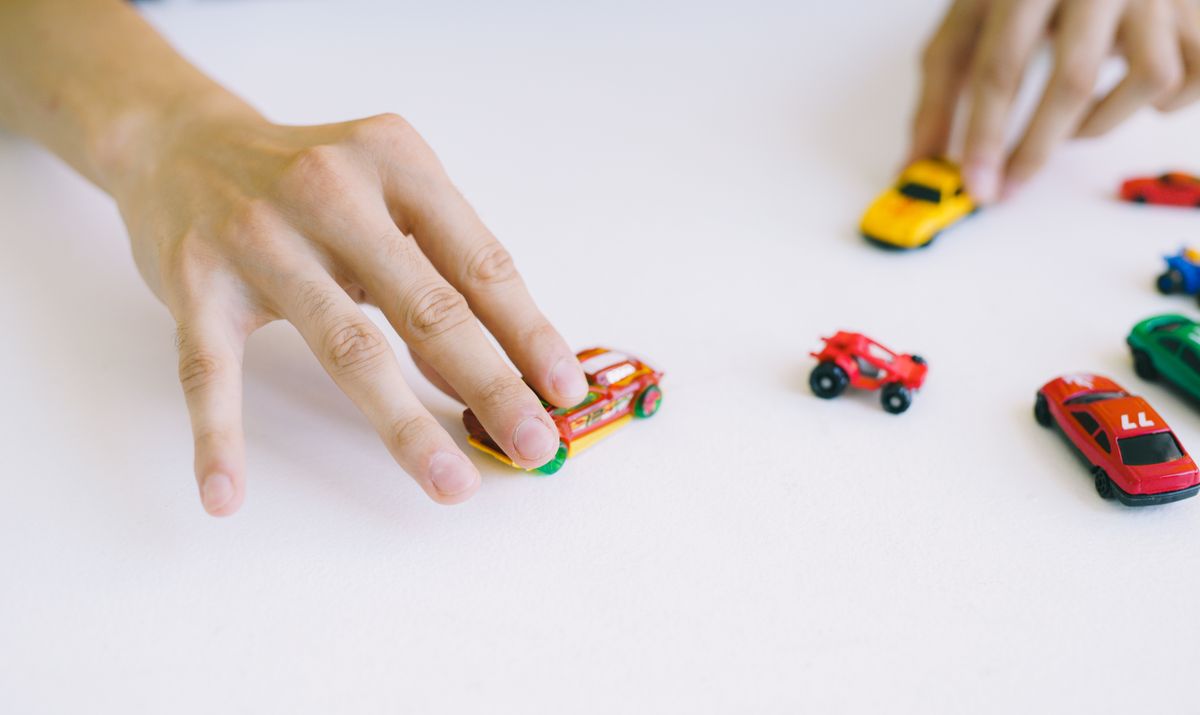
Photo by SHVETS production on Pexels
Child development is a wide idea. This listing touches one corner of it. Drawing a vehicle backward and letting it go asks the fingers to hold on, the arm to pull, and the eyes to predict a path. Families often connect those motions with fine-motor practice. The page does not use a test name, a milestone chart, or a percentage. Treating the coordination sentence as a general invitation to play is fair. Treating it as a measured developmental outcome is not.
The materials line does not fill that gap. Vehicles are made from durable, high-quality materials and built to last. That is a construction statement. It does not say which material, and it does not say the construction was chosen to hit a developmental target. The safety line is similarly limited. Toys are safety tested and approved and meet United States toy standards for safe play, without a code or a lab name. Safe play and child development are related worries for a parent, yet they are different sentences. One does not prove the other.
Limits that should stay answered plainly
Some questions should stay answered as limits so the listing is not stretched. There is no numeric age. There is no battery and no switch, so the development story is the pull-back motion, not a powered ride. There is no printed speed, even though the page calls the play high-speed. There is no promise that every design rolls the same distance. There is no warranty term if a vehicle cracks. There is no small-parts statement. An answered FAQ that invents those lines would be less useful than a short refusal.
What remains is still practical. Start on December 1. Open one door. Let the child pull the new vehicle back and release it on a clear floor. Keep the session short. Carry the fleet outdoors only when the ground is dry and flat and an adult is close, because the page says the vehicles are easy to carry and can be used outdoors. Put them away afterward. The next developmental opportunity the listing actually structures is tomorrow's door, not a score sheet. Parents who need a clinical answer will need a source other than this product page.
Development questions and the page
| Parent question | Answer the page supports | Answer it does not support | | --- | --- | --- | | What skill is named? | Hand-and-eye coordination | A tested motor score | | How often is play paced? | One vehicle a day | A required drill length | | Who is it for? | Toddlers and vehicle-loving kids | A numeric age | | What does price mean? | $29.95 list price | A development rank | | Are they safe to play with? | Tested to United States standards | A named code or lab |
Answered points to keep straight
Photo by Kristian Bøgh on Pexels
- Quote the coordination sentence instead of a skill percentage.
- Describe the motion as grip, draw-back, release, and watch.
- State that 24 unique vehicles open one a day from December 1.
- Say clearly that no numeric age is printed.
- Separate the $29.95 price from any development claim.
- Keep the safety-tested line out of the skill column.
- Leave tomorrow's door closed after today's short session.
Parent questions answered from the listing
Are pull-back cars tied to a development score?
The listing ties them to coordination of hands and eyes. It does not print a child-development score, a milestone chart, or a clinical result.
What can a parent say about age?
A parent can say the page uses toddler language and speaks to kids who love vehicles. A parent cannot cite a numeric age, because the listing does not print one.
Does racing two vehicles prove a skill gain?
Racing fits the description of children who like to race, and designs are unique. The page does not claim equal speed or treat a longer roll as developmental proof.
Where should the price sit in the answer?
The listed price is $29.95. That figure belongs in a cost answer, not in an answer about child development.
Related reading
These related pages expand on development wording, holiday safety, and race-themed choices.
- Developmental notes on pull-back countdown play
- Safety questions for holiday vehicle countdowns
- Selecting a race car countdown for boys
What to do next
A parent can answer the next household question with the coordination sentence, the December 1 pace, and the missing age number written in that order. If the question asks for a score, the honest close is that this listing does not provide one. The vehicles still come out one door at a time.
Cover photo by vickie photography on Pexels.