
Pull-Back Cars vs. Battery-Powered Vehicles: Which Better Promotes Finger Dexterity?
Pull-back cars give the fingers more to do on each launch than a typical switch on a battery-powered vehicle, but this listing does not prove which better promotes finger dexterity. The page describes 24 uniquely designed pull-back vehicles and a hand-and-eye coordination claim. It describes no battery, no switch, and no dexterity score.
Finger work inside a pull-back launch
Finger dexterity, in everyday speech, means small controlled movements of the fingers. A pull-back launch uses several of them. The fingers close around the vehicle, hold while the arm draws it backward, and open at the moment of release. The eyes then check where it went. The JOYIN listing does not use the phrase finger dexterity. It says the toys can cultivate the coordination of children's hands and eyes. That is the closest sentence, and it is not a measured dexterity result.
The set contains 24 uniquely designed pull-back vehicles. One door opens each day starting December 1, so the finger sequence can return on a new shape instead of on a single toy. Designs differ, and the page does not claim a shared size, weight, or speed, even though it calls the play high-speed. A thicker body may ask for a wider grip. The listing does not rank designs by how much finger work they demand. The listed price of $29.95 does not rank them either. Durable, high-quality materials built to last is a construction line, not a dexterity specification.
What battery-powered vehicles ask instead
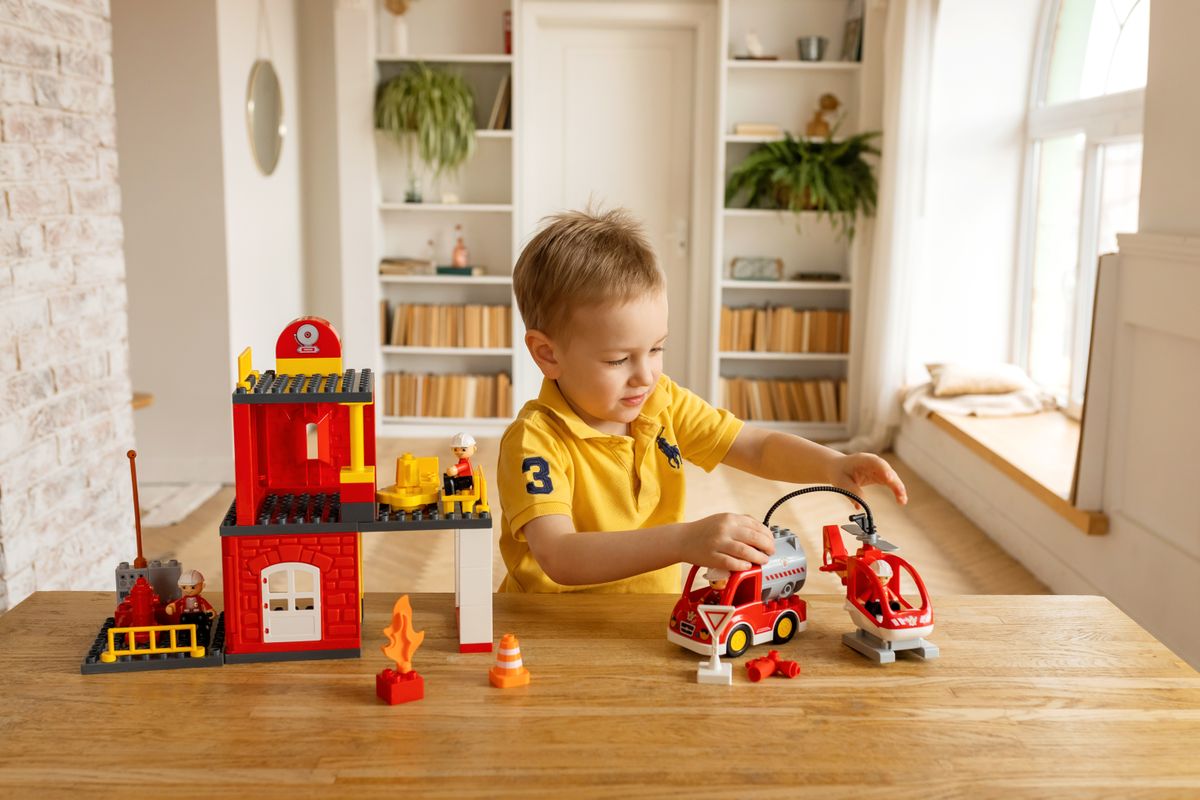
Photo by Polesie Toys on Pexels
Battery-powered vehicles, as a general category, often move after a switch, a button, or a similar control. That can still ask a finger to press. It usually does not ask the child to draw the whole vehicle backward and release it. The comparison is about the size of the hand task, not about which toy is more exciting. This listing never describes a battery-powered option, so it cannot confirm how any particular powered vehicle is switched on. Households comparing a specific powered toy need that toy's own page.
A fair reading still helps the decision. If the goal is repeated drawing-back and letting go, a pull-back vehicle matches that goal by design. If the goal is watching a vehicle move after a small press, a battery-powered vehicle may match better, and this page does not sell that second goal. Neither description promotes a laboratory dexterity score. The word promotes matters here. A product page can describe a motion. It does not, on this listing, promote a tested gain in finger skill for either type. Safety wording on this page covers the pull-back toys only: safety tested and approved to United States toy standards, with no code named, and with no comment on batteries.
Which practice better promotes dexterity
Which option better promotes finger dexterity depends on which motion a household wants to practice, and on whether anyone is claiming a score. For the draw-back and release, pull-back cars are the closer match, and they are the only match this listing sells. For a single press, many battery-powered vehicles ask less of the fingers, which may be easier for some children and less practice for others. The listing does not test that tradeoff. It does not print a numeric age, though it uses toddler language and speaks to kids who love vehicles. Readiness stays a household decision.
Daily use should follow the countdown that is printed. December 1 is the first door. Later doors stay closed until their day. A few releases of the new vehicle are a full session. An earlier vehicle can roll beside it for a race, which fits children who like to collect, race, and explore. The vehicles are easy to carry and can be used outdoors on a dry, flat spot with an adult nearby. None of those routines turn the morning into a dexterity exam. They keep the finger practice attached to a real object the page actually includes, without borrowing claims from battery-powered vehicles the page never mentions.
Pull-back motion versus a battery switch
| Question | Pull-back on this page | Battery-powered, in general | | --- | --- | --- | | Start motion | Grip, draw back, release | Often a switch or button | | Finger demand | Hold, pull, and let go | Often one press | | This listing | 24 vehicles, no battery | Not included or described | | Skill claim | Hands and eyes only | No comparison score here | | Power source | The pull-back mechanism | A battery this page omits |
Before choosing for finger practice

Photo by Boris Hamer on Pexels
- Decide whether the wanted motion is a draw-back or a simple press.
- Read this listing as pull-back only, with no battery and no switch.
- Do not expect a dexterity score for either type of vehicle.
- Keep the hand-and-eye sentence separate from any clinical claim.
- Open one of the 24 doors each day starting December 1.
- Ignore speed boasts that come without a measured figure.
- Leave battery details to the other product's own page.
Questions on dexterity and vehicle type
Which type does this listing actually include?
It includes 24 uniquely designed pull-back vehicles and no battery-powered vehicles. One door opens each day starting December 1.
Does the page say pull-back play promotes dexterity?
The page says the toys can cultivate coordination of hands and eyes. It does not use a dexterity score or claim that pull-back play promotes a measured finger result.
Can battery-powered vehicles be judged from this page?
Only at the level of a general contrast between a draw-back and a switch. The listing does not name a battery-powered model, a switch type, or a head-to-head test.
Does price pick the better dexterity option?
The listed price is $29.95 for this pull-back set. Price does not show which motion better promotes finger dexterity, because no such test is printed.
Related reading
Related guides cover ramps, track setups, and the coordination claim behind pull-back play.
- Building ramps for pull-back vehicles
- Cardboard tracks compared with store-bought mats
- Hand-eye practice in a pull-back countdown
What to do next
A household that wants the draw-back motion can stay with this pull-back set and ignore battery comparisons the page does not run. A household that wants a switch-started vehicle needs a different listing, read on its own terms. Neither choice should be described as a proven dexterity program unless some other source actually measured it.
Cover photo by Nikita Korchagin on Pexels.